The real architecture question in modern LLM systems is not whether RAG is fashionable. It is how you inject the right context into the model at the right time. Large language models still do not know what happened five minutes ago, and they do not know your internal documentation, private codebase, contracts, support tickets, or product notes unless you explicitly provide that information.
For the last two years, retrieval-augmented generation became the default answer to that problem. It made sense: context windows were smaller, external knowledge had to be filtered aggressively, and retrieval felt like the only practical way to ground model outputs. But the design space has shifted. Larger context windows mean you now have a real alternative, and that changes when RAG should be used.
The better question in 2026 is simple: when should you retrieve, and when should you just give the model the full material and let it reason across it directly?
Two Ways to Give an LLM More Context
There are now two mainstream patterns for giving an LLM access to information beyond its base training.
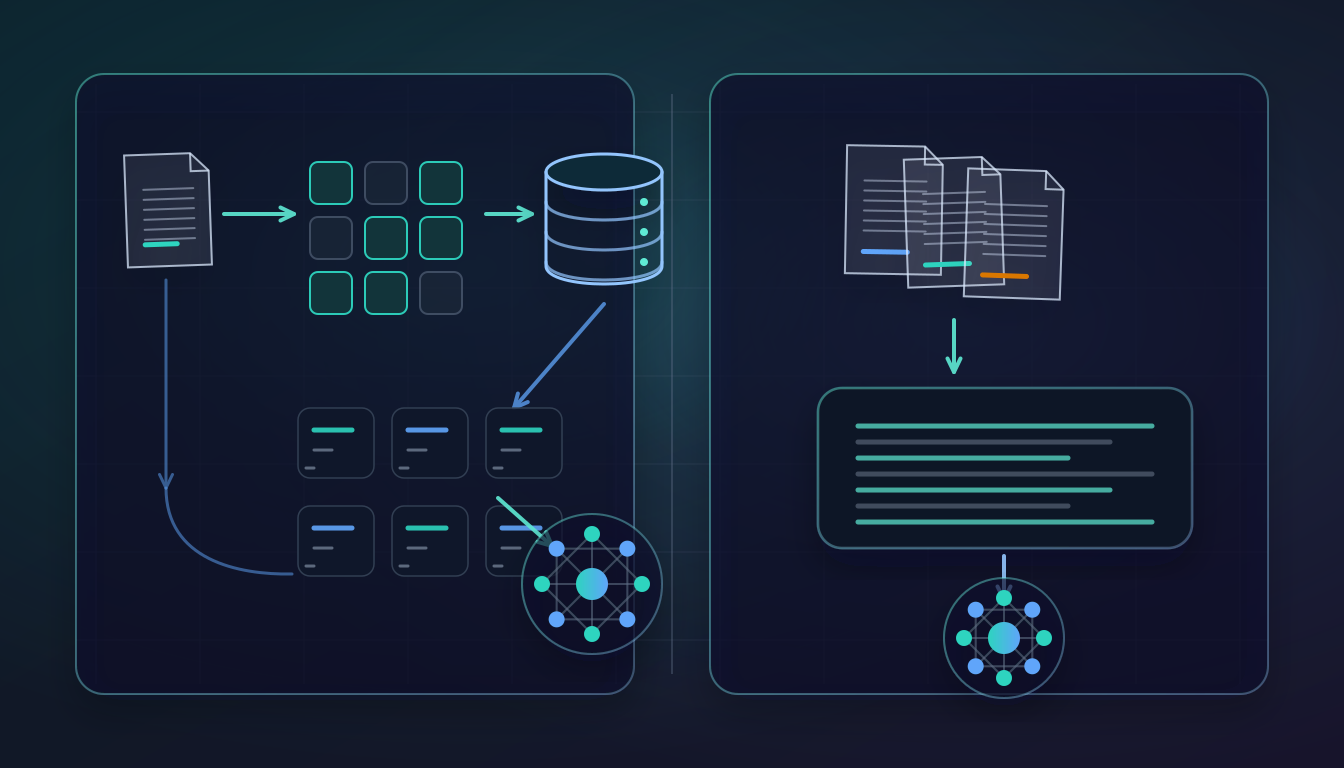
RAG adds a retrieval layer in front of the model. Documents are split into chunks, indexed, and searched when a user asks a question. The application then assembles the prompt from the user request plus the retrieved snippets.
Long context removes most of that machinery. Instead of searching for a few likely passages, you place a much larger portion of the source material directly into the model context window and let the model handle the reasoning step itself.
Both approaches are valid. The mistake is treating either one as a universal default.
Why Long Context Became a Real Option
Long context used to be mostly theoretical for production systems. Today it is a practical design choice for many workloads because it simplifies the stack and improves certain types of reasoning.
- Simpler architecture: you can remove chunking pipelines, embedding jobs, vector indexes, reranking logic, and synchronization problems between source data and retrieval layers.
- Fewer silent misses: if the relevant material is already in the prompt, there is no retrieval step that can quietly omit the exact paragraph the model needed.
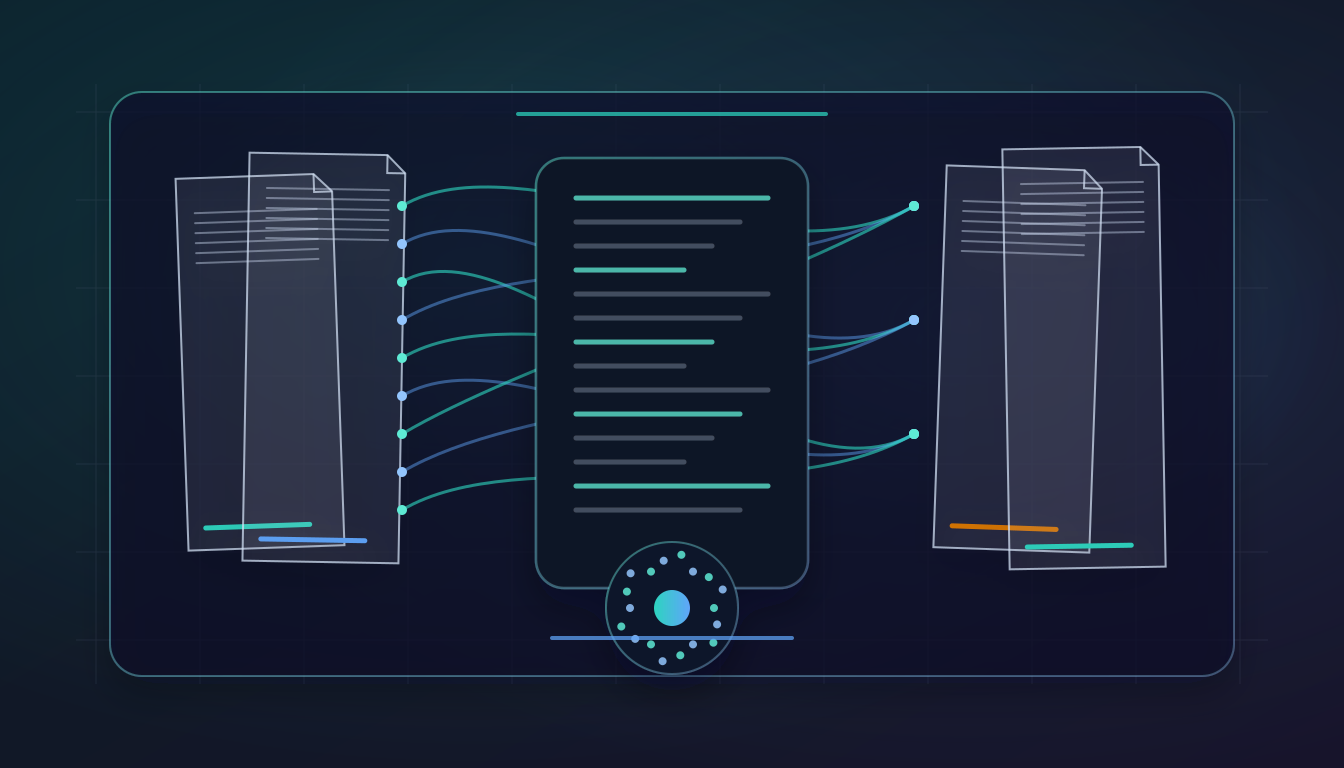
- Better global reasoning: some questions require seeing entire sections, multiple documents, or the relationship between what is present and what is missing.
This last point matters more than many teams expect. If the task is to compare a requirements document against release notes, audit two policy versions, or summarize a bounded report with internal contradictions, isolated snippets are often not enough. The model benefits from seeing the whole set of evidence at once.
In those cases, long context is not just more convenient. It can be the more reliable reasoning setup because the model has direct access to the full picture instead of a best-effort sample.
Why RAG Still Matters
None of that means RAG is obsolete. It means its job is narrower and more clearly defined than it was before.
The first reason is cost. Sending a large body of text with every request means paying the processing cost repeatedly. For static or slowly changing material, RAG lets you do the expensive indexing work once and retrieve only the most relevant slices later.
The second reason is focus. More context does not automatically mean better answers. When a prompt contains too much irrelevant material, the useful signal can be diluted. Narrowing the input to the most relevant passages can still produce sharper, cheaper responses than dumping everything into the model and hoping attention lands in the right place.
The third reason is scale. Enterprise knowledge does not fit neatly into a single prompt. If your application needs to reason over a large and constantly changing corpus such as support archives, internal wikis, tickets, chat logs, and code, you still need a filtering layer. RAG remains the practical mechanism for turning an effectively unbounded data set into something a model can actually consume.
- Use RAG when the corpus is too large to send directly.
- Use RAG when documents change frequently and full prompt stuffing would be too expensive.
- Use RAG when the task is usually about finding a few relevant passages, not reasoning across an entire bounded set.
The Main Tradeoff Is Retrieval Precision Versus Context Completeness
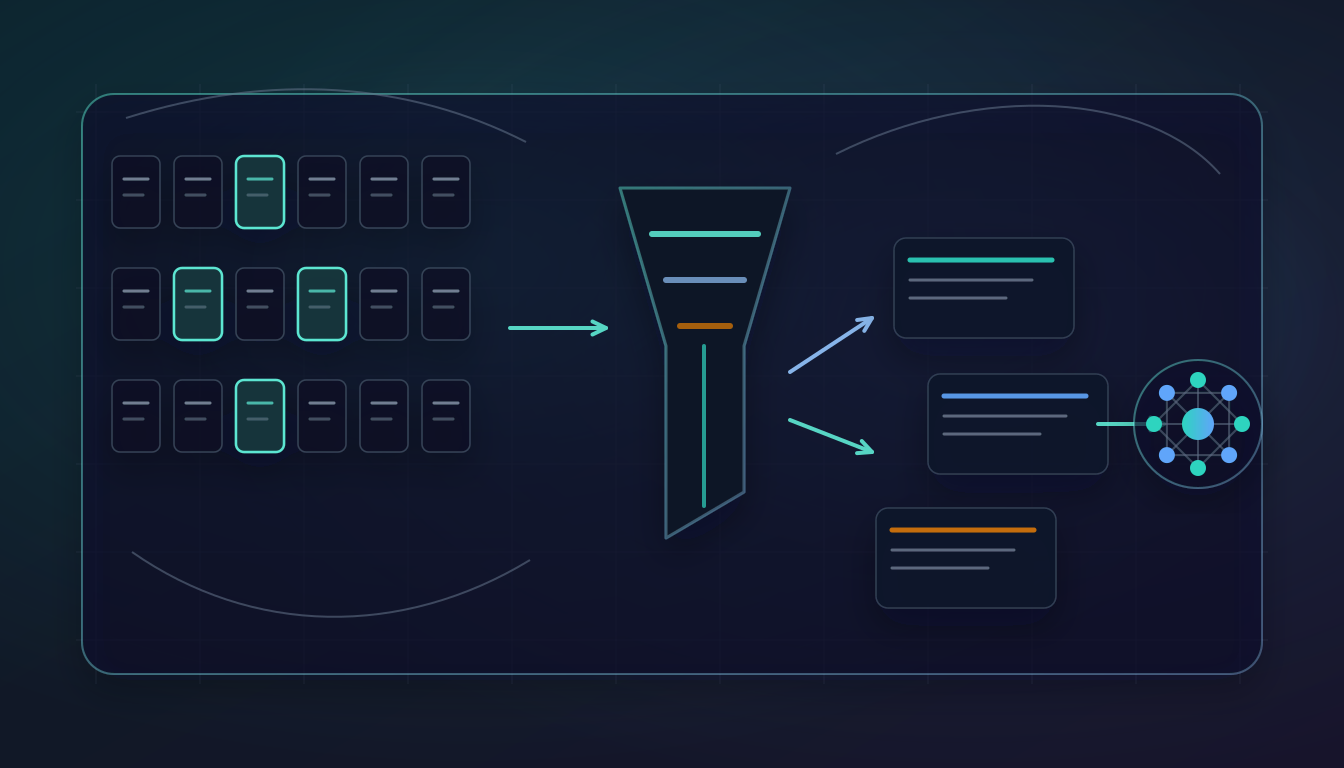
RAG optimizes for precision. It tries to retrieve the smallest useful subset of information so the model can focus on the likely answer.
Long context optimizes for completeness. It gives the model broader visibility and lets it decide what matters during generation.
That means each approach fails differently.
- RAG failure mode: the right answer exists in the source material, but the retrieval layer does not surface it.
- Long context failure mode: the model sees too much material, spends tokens inefficiently, or loses focus on the most important evidence.
Once you frame the decision that way, the architecture becomes easier to choose. The question is not which camp you belong to. The question is which failure mode is more dangerous for the workload in front of you.
A Practical Framework for Choosing
If your problem involves a bounded corpus and the quality of the answer depends on global reasoning, long context is often the better choice. Examples include contract review, book summarization, multi-document comparison, and analysis of a finite project packet.
If your problem involves a large or fast-changing corpus, RAG is still the stronger default. It is better suited to internal knowledge assistants, support search, enterprise search, and applications that must find a small answer inside a very large body of material.
If your workload mixes both patterns, a hybrid approach is usually the right move. Retrieve a focused set of documents first, then give the model enough surrounding context to reason across them properly. In practice, many mature systems will end up here.
| Use case | Best fit | Why |
|---|---|---|
| Contract or report analysis | Long context | The task depends on reasoning across the full bounded document set. |
| Enterprise knowledge assistant | RAG | The corpus is too large and dynamic to include directly in every prompt. |
| Product spec versus release audit | Long context | The model needs the full picture to detect omissions and inconsistencies. |
| Internal search with follow-up synthesis | Hybrid | Retrieval narrows the search space, then broader context supports reasoning. |
RAG Is Still Relevant, but It Is No Longer the Default Reflex
The important shift is not that RAG stopped working. It is that long context removed the need to reach for retrieval first in every design. Some teams are still carrying the full complexity of chunking, embeddings, reranking, and vector storage for problems that could now be solved more simply by passing the right bounded material directly to the model.
At the same time, large-scale knowledge systems still need retrieval. If your data is broad, noisy, fast-moving, or effectively unbounded, RAG remains one of the most useful tools in the stack.
So yes, RAG is still relevant today. It is just no longer the automatic answer. In 2026, the better architecture comes from matching the mechanism to the shape of the problem: long context for complete bounded reasoning, RAG for scalable retrieval, and hybrid systems when you need both.